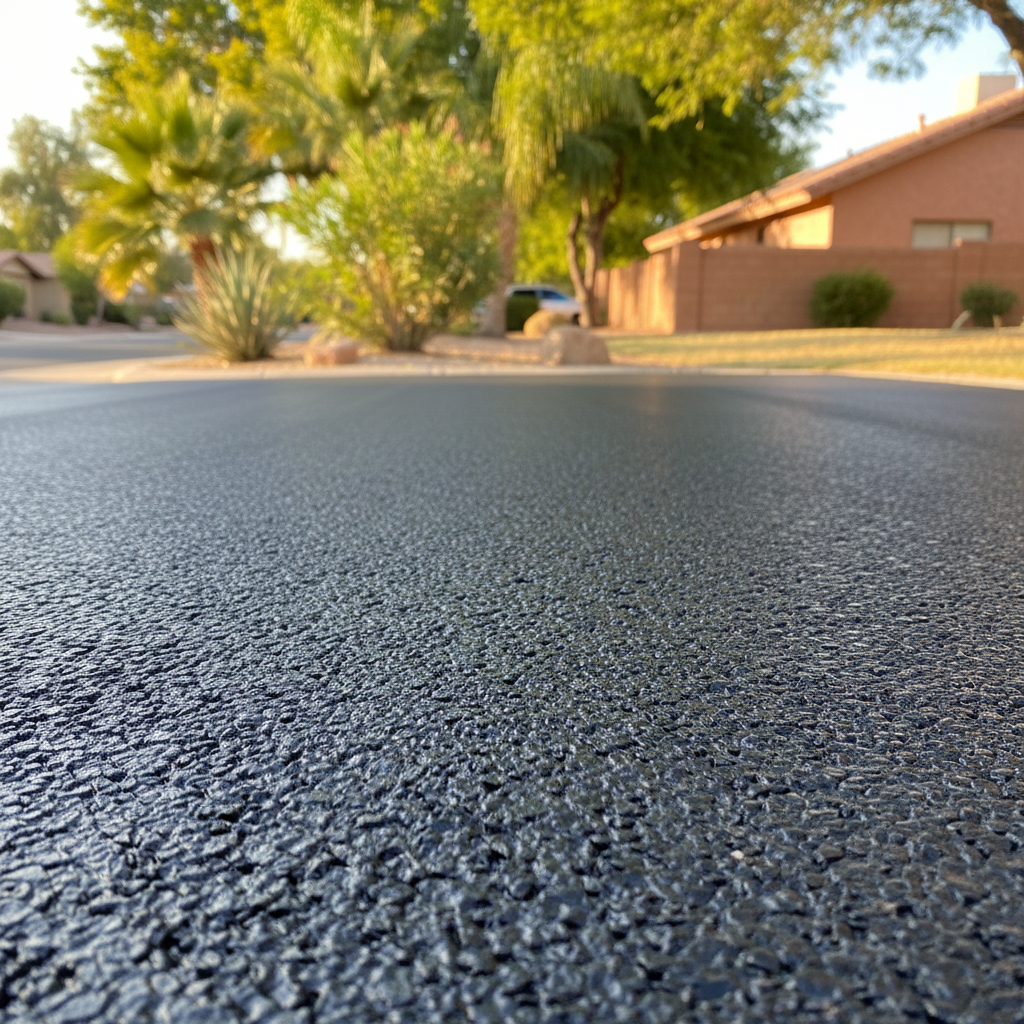
Can I use commercial-grade asphalt for my home driveway?
That's a question I hear a lot, especially from folks with bigger properties or those who really want something super tough. The quick answer is yes, you *could*, but honestly, it's usually overkill and probably not what you actually need. Commercial asphalt mixes are built for serious traffic — I'm talking constant abuse from big trucks, and all those tight turning movements you just don't see on a regular residential driveway. Think about a busy shopping center parking lot or a loading dock; that's the kind of punishment commercial asphalt is designed to take. Your home driveway, even if you've got a few cars, simply doesn't experience that kind of stress.
We use different aggregate sizes and binder content for commercial jobs to handle those extreme loads. For your house, though, a standard residential mix works perfectly well. It's made to stand up to typical household vehicle traffic, the Arizona sun, and still give you a smooth, long-lasting surface without the extra cost of a commercial mix you don't need.
What's the real difference between residential and commercial asphalt?
It mostly comes down to how the mix is designed, specifically the aggregate (that's the rocks and sand) and the asphalt binder (the sticky stuff that holds everything together). Commercial asphalt usually has a coarser, denser aggregate structure and sometimes a higher percentage of binder. This makes for a tougher, more rigid pavement. It's engineered for pure strength and to resist rutting even under really heavy loads.
Residential asphalt, on the other hand, uses finer aggregates. This makes it a bit more flexible and easier to work with for smaller areas and those trickier shapes, like a curved driveway. It's also more budget-friendly because you're not paying for materials and labor designed for a semi-truck when all you're driving is a sedan or an SUV. Here in Phoenix, both types need to handle our intense summer heat, but their basic structure is different because they're made for different jobs.
Is commercial asphalt more expensive for a home project?
Oh, absolutely, it is. You're paying for those specialized materials, the denser mix, and often the specific equipment needed to lay and compact it right. Commercial projects typically involve bigger crews and more heavy-duty machinery, too. If you asked us to pave your driveway with a commercial-grade mix, you'd definitely see a significant jump in the price per square foot compared to a residential mix. It's not just the materials; it's the whole process. For most homeowners, that extra cost just isn't worth it for any real benefit to their property.
Will commercial asphalt last longer on my driveway?
You'd think so, wouldn't you? Stronger materials, longer life. But it's not quite that simple. While commercial asphalt is built for extreme durability under specific conditions, putting it on a residential driveway doesn't automatically mean it'll last twice as long. A properly installed residential asphalt driveway, if you keep it up with regular sealcoating and minor repairs, can easily last 15-20 years, sometimes even more, even with our brutal Phoenix summers and monsoon season. The key is good installation and ongoing care, not necessarily over-engineering the material for its actual use. You're actually more likely to see problems from poor drainage or a bad sub-base than from using residential-grade asphalt.
What if I have heavy vehicles, like an RV, regularly on my driveway?
Okay, this is where things get a little more complicated. If you've got a huge RV, a boat on a trailer, or maybe you're a contractor who parks heavy equipment at home, then yes, we might consider a slightly more robust mix or a thicker base layer. We're not necessarily talking full-blown commercial parking lot asphalt, but we can definitely tweak the residential mix or sub-base to handle those heavier point loads. It's all about finding the right balance. We'd look at the weight, how often it's parked, and how long it sits there. This is where a quick chat with a pro like us at Progressive Asphalt Solutions can really help you figure out the best, most cost-effective solution without going overboard.
Can I just get a thicker layer of residential asphalt instead of commercial?
Yes, that's often a much smarter approach if you're worried about durability for slightly heavier use. Making your residential asphalt layer thicker, or improving the aggregate base underneath, can give you a lot of the extra strength you might be looking for without jumping to a full commercial mix. A thicker layer spreads the weight over a larger area, which reduces stress on the pavement. This is a common strategy we use for driveways that see a bit more action than average, say, in a neighborhood like Arcadia where folks often have larger vehicles or more frequent deliveries. It's a clever way to get added resilience without the unnecessary expense of commercial-grade materials.
When would a homeowner actually NEED commercial asphalt?
Honestly, it's pretty rare. The only times I've ever recommended anything close to a commercial mix for a homeowner is if they're building something truly unique, like a private road on a huge ranch that will see heavy farm equipment traffic, or maybe a very specific industrial-grade workshop at home where they're constantly moving forklifts. For 99% of homeowners, even those with big trucks or RVs, a well-designed and properly installed residential asphalt driveway with an appropriate base is more than enough. Don't let anyone try to sell you something you don't need; a good contractor will always recommend the right solution for your specific situation and budget.