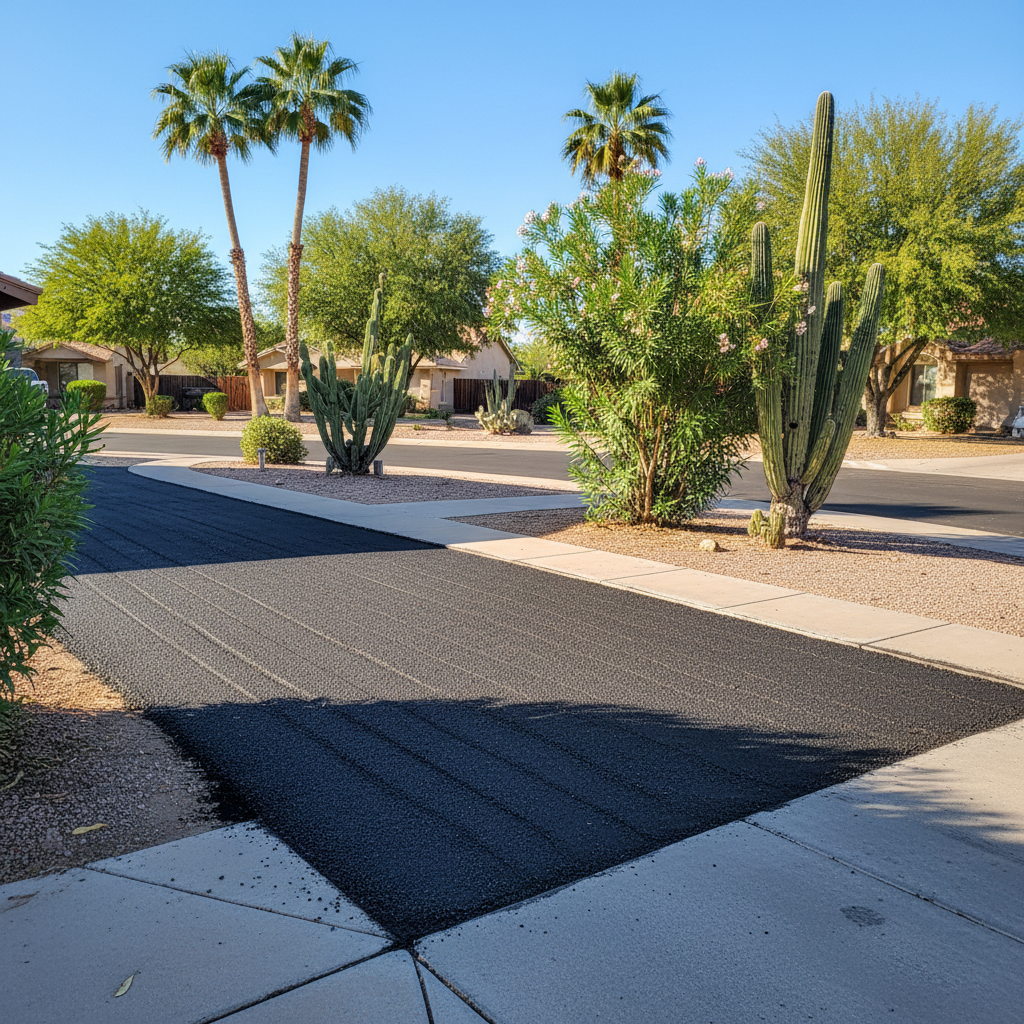
Thinking about milling your asphalt driveway or private road? That's a smart move, really. It lets you refresh a worn surface without the huge cost of a full tear-out. But here in Phoenix, you can't just pick any old day to get it done. Our climate dictates a lot, and if you don't plan it right, you won't get the best value for your money.
When's the Best Time for Asphalt Milling in Phoenix?
Honestly, the best time to schedule asphalt milling work is usually during the cooler months. I'm talking late fall, winter, and early spring – roughly October through April. Why then, you ask? Because milling involves taking off the top layer of asphalt, and if it's too hot, the existing asphalt can get really soft and sticky. This makes the milling process less efficient, and you might not get as clean a cut. Plus, the equipment works harder, and it's just not ideal for the crew.
We've certainly done jobs in the summer, but it's always a tougher go. The heat isn't just hard on the asphalt; it's hard on the equipment and the guys working out there. When you're talking about a residential driveway, you want precision, and cooler temperatures help us deliver that.
What Weather Conditions Affect Milling?
Beyond just the heat, we keep an eye on a few other weather factors:
- Extreme Heat: Like I said, anything over 100 degrees Fahrenheit makes the asphalt too pliable. It can gum up the milling machine and lead to a less uniform surface. We definitely try to avoid those brutal July and August afternoons if we can.
- Rain: You might think rain would be a big problem, but a light sprinkle isn't usually a deal-breaker for milling itself. The real issue comes if the ground underneath gets saturated. Milling on wet, soft subgrade can cause stability problems for the equipment and compromise the base for the new asphalt layer. We're not talking about a monsoon, but consistent heavy rain can certainly push a job back.
- Dust Storms (Haboobs): These are more of a safety and visibility issue than a direct impact on the milling process. If a haboob rolls through, we're stopping work. Can't see, can't work safely, right?
We're always checking the forecast a few days out. We'll communicate with you if we see something that might affect your scheduled work. We'd rather reschedule than do a rushed job that doesn't meet our standards, or yours.
Protecting Your Asphalt Investment Year-Round
Once you've had your milling done and the new asphalt laid down, you want to make sure it lasts. Here in Phoenix, our sun is probably asphalt's biggest enemy. It bakes everything, and that constant UV exposure breaks down the binders in the asphalt, making it brittle and prone to cracking.
Here's what you can do:
- Sealcoating: This is your first line of defense against the sun and minor wear. It puts a protective layer over the asphalt, blocking UV rays and preventing water from getting in. I usually recommend waiting about 6-12 months after a new asphalt installation (or an overlay after milling) to let the new surface cure properly before sealcoating. After that, every 2-3 years is a good schedule for most residential driveways, depending on traffic and sun exposure.
- Regular Cleaning: Keep it clean. Sweep off dirt, leaves, and debris. Oil and gas spills? Clean them up quickly. They'll eat away at your asphalt if you leave them too long.
- Address Cracks Early: Even with good maintenance, cracks happen. When you see them, don't ignore them. Small cracks are easy and inexpensive to fill. If you let them grow, water gets in, expands with temperature changes, and before you know it, you've got potholes. This is especially true with our expansive desert soils; water getting into cracks can really accelerate damage.
- Avoid Heavy Loads: If you've got heavy RVs or equipment, try to park them on a designated, reinforced area if possible, or at least rotate where they sit. Concentrated weight in one spot can cause depressions over time.
Milling is a fantastic way to extend the life of your driveway, and when done right, it'll look great for years. Just remember, here in Phoenix, a little planning around the weather goes a long way. If you're thinking about milling or need advice on your asphalt, give us a call at Progressive Asphalt Solutions. We're always happy to talk through your options.