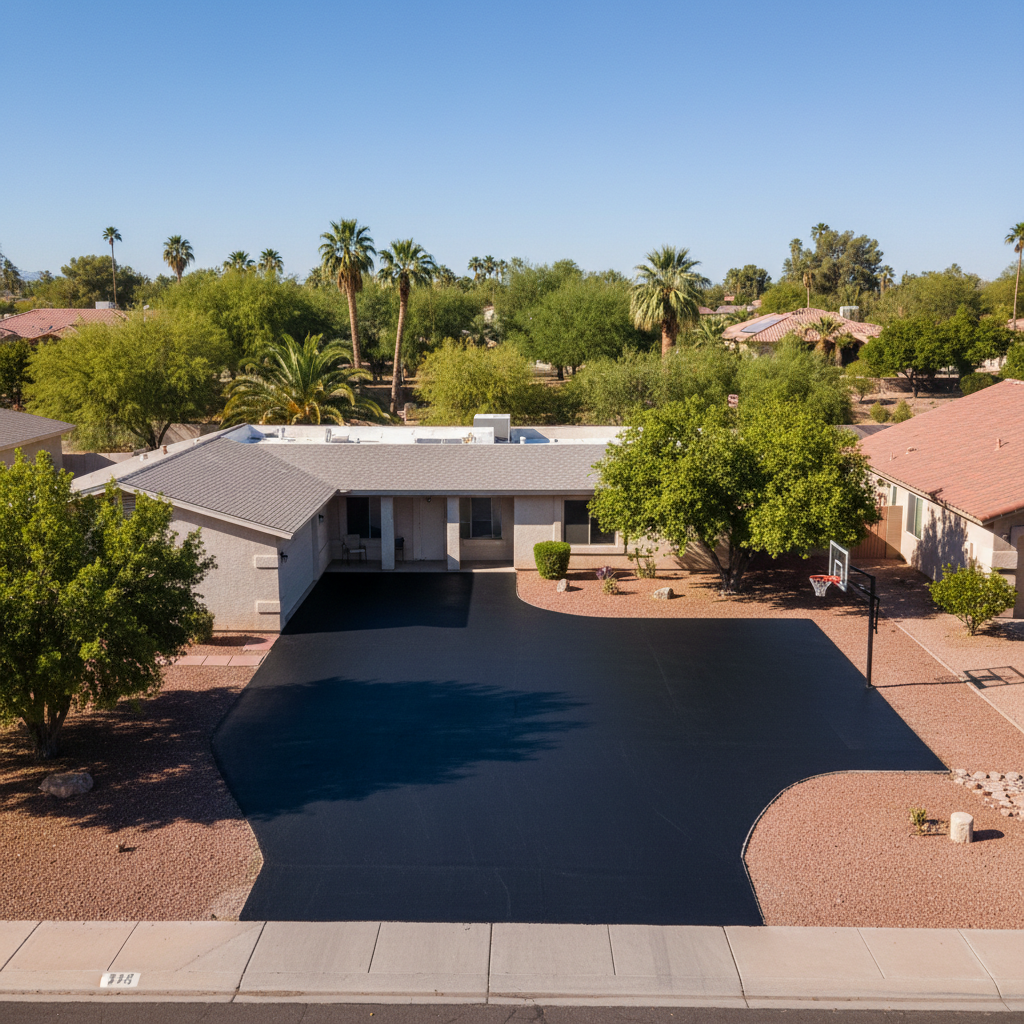
Alright, let's talk about sealcoating for your Phoenix home. You've got that asphalt driveway, and you know it needs some TLC to stand up to our brutal Arizona sun and those summer monsoons. But where do you even start? It's not just about slapping some black stuff down, you know; there's a real process to it if you want it to last.
The Sealcoating Timeline: When to Get it Done
First things first, timing is everything, especially here in Phoenix. You want to hit that sweet spot when temperatures are warm but not scorching, and definitely no rain in the forecast. For us, that usually means spring or fall. You need consistent air and surface temperatures above 50 degrees Fahrenheit, and no rain for at least 48 hours after the application. If it rains on a fresh sealcoat before it cures, well, you've got a problem on your hands.
If you've got a brand-new asphalt driveway, hold off on sealcoating it right away. New asphalt needs about 6 to 12 months to cure properly before you put a sealer on it. After that initial seal, you're generally looking at reapplying every 2 to 3 years. This depends, of course, on how much traffic your driveway sees and how well it's holding up—makes sense, right?
What to Expect During the Process
When the crew from Progressive Asphalt Solutions shows up, here's what you should expect to happen:
- Initial Inspection & Cleaning: Before any sealer touches your driveway, a good contractor will do a thorough inspection. They're looking for cracks, potholes, oil stains, and any other damage. Then, they'll clean the surface. This isn't just a quick sweep; it involves removing dirt, debris, leaves, and grime, often with power blowers or even power washing for really tough spots. Oil and grease spots get special treatment with cleaners and primers to make sure the sealer sticks.
- Crack Filling & Repairs: Any cracks need to be cleaned out and filled before sealcoating. We use a hot, rubberized crack filler for the best results. If there are small potholes or damaged areas, those get patched up too. This step is crucial because sealcoat won't fix structural issues; it protects what's already there.
- Application: Once everything's clean and repaired, the sealcoat gets mixed. A good contractor will mix it according to the manufacturer's instructions, sometimes adjusting for temperature or surface texture. It's usually applied in two coats using sprayers or squeegees for an even finish. We'll make sure to 'cut in' around concrete, sidewalks, and landscaping to keep things neat.
- Drying & Curing: This is where your patience comes in. You'll need to stay off the driveway for a while. You can usually walk on it after 3-4 hours if conditions are ideal. But you absolutely need to keep cars off for at least 24-48 hours. Full curing can take up to 30 days, so be gentle with it during that first month – no sharp turns or heavy vehicles parked in the same spot for too long.
How to Prepare Your Driveway for Sealcoating
Your contractor will handle most of the heavy lifting, but there are a few things you can do to make sure the project goes smoothly:
- Clear the Area: Remove all vehicles, trailers, trash cans, toys, and anything else from the driveway and surrounding areas. Don't forget potted plants or outdoor furniture.
- Trim Vegetation: Mow your lawn and trim any grass or weeds growing along the edges of your asphalt. This helps the crew get a clean edge.
- Turn Off Sprinklers: Shut off your automatic sprinkler system at least 24 hours before the work starts and keep it off for another 24 hours after. You don't want water messing with the fresh sealcoat, right?
- Plan for Access: You won't be able to use your driveway for at least 24-48 hours, so make alternative arrangements for parking your cars and for any deliveries.
- Clean Up Stains (Optional but Recommended): While the pros will treat oil spots, giving your driveway a good scrub for any major oil or grease stains a few days before can help.
Questions to Ask Before You Sign That Contract
Don't just go with the first quote you get. Ask these questions to make sure you're hiring a reputable company:
- Are you licensed and insured? Always ask for proof. This protects you if anything goes wrong.
- How long have you been in the sealcoating business? You want someone with solid experience, not just a general paving company that dabbles in sealcoating. Ask if they have experience with residential driveways specifically.
- What kind of sealer do you use, and how do you mix it? Reputable companies use quality materials and follow manufacturer specifications. Be wary of